
504 Plan vs. IEP for Dyslexia in Florida Schools
Two different tools, two different purposes. Here's what each one actually provides for a child with dyslexia in a Florida public school — and how to figure out which path fits.
A 504 Plan provides accommodations, like extended time or audiobooks, without specialized instruction. An IEP provides individualized, specialized instruction with measurable goals and requires a formal evaluation under Florida's Exceptional Student Education (ESE) process. Children who need direct reading intervention, not just accommodations, typically need an IEP rather than a 504 Plan.
504 Plan vs. IEP: what's actually different
Section 504 Plan
- Provides accommodations (extra time, audiobooks, preferential seating)
- Does not typically provide specialized, individualized instruction
- Governed by Section 504 of the Rehabilitation Act
- Generally easier and faster to qualify for
- Reviewed periodically, but less formally structured than an IEP
IEP (Individualized Education Program)
- Provides specialized instruction, services, and measurable goals
- Can include structured literacy or reading intervention minutes
- Governed by IDEA and Florida's Exceptional Student Education (ESE) rules
- Requires a formal evaluation establishing eligibility
- Reviewed annually with a full re-evaluation on a set schedule
A simple way to think about it
Accommodations are enough
If your child can access grade-level material with extra time, assistive tech, or minor adjustments, a 504 Plan may be sufficient.
Specialized instruction is needed
If your child needs direct, specialized reading instruction to make progress — not just accommodations — an IEP is usually the more appropriate path.
Either way, request an evaluation in writing
Florida school districts are required to respond to a written request for an evaluation through their Exceptional Student Education (ESE) department — this starts the formal process for either plan.
Neither plan replaces outside, one-on-one Orton-Gillingham therapy — both are about what happens inside the school day. Many ClearPath families use school accommodations and private structured literacy therapy together.
It matters who's teaching your child.
Most reading tutors are not trained in dyslexia. Real progress comes from Orton-Gillingham-based instruction, delivered by someone certified to teach it — that one fact is often the difference between a child who keeps struggling and a child who finally moves forward.
A General Reading Tutor
- Reviews homework and practices sight words
- Uses whatever curriculum the school sends home
- No specific training in language-based learning differences
A CALT-Certified Academic Language Therapist
- Trained specifically to diagnose and treat dyslexia
- Delivers structured, explicit, cumulative instruction
- Certified through a rigorous, supervised training program
Sessions at ClearPath Dyslexia are led directly by Kathleen Ferrufino, M.Ed., CALT — a Certified Academic Language Therapist and Dyslexia Therapist based in Orlando, Florida, trained and credentialed specifically to work with students with dyslexia and language-based reading difficulties. Not a rotating tutor. Not a generic curriculum. Every plan starts with an assessment and is tracked with data, so you always know where your child stands.
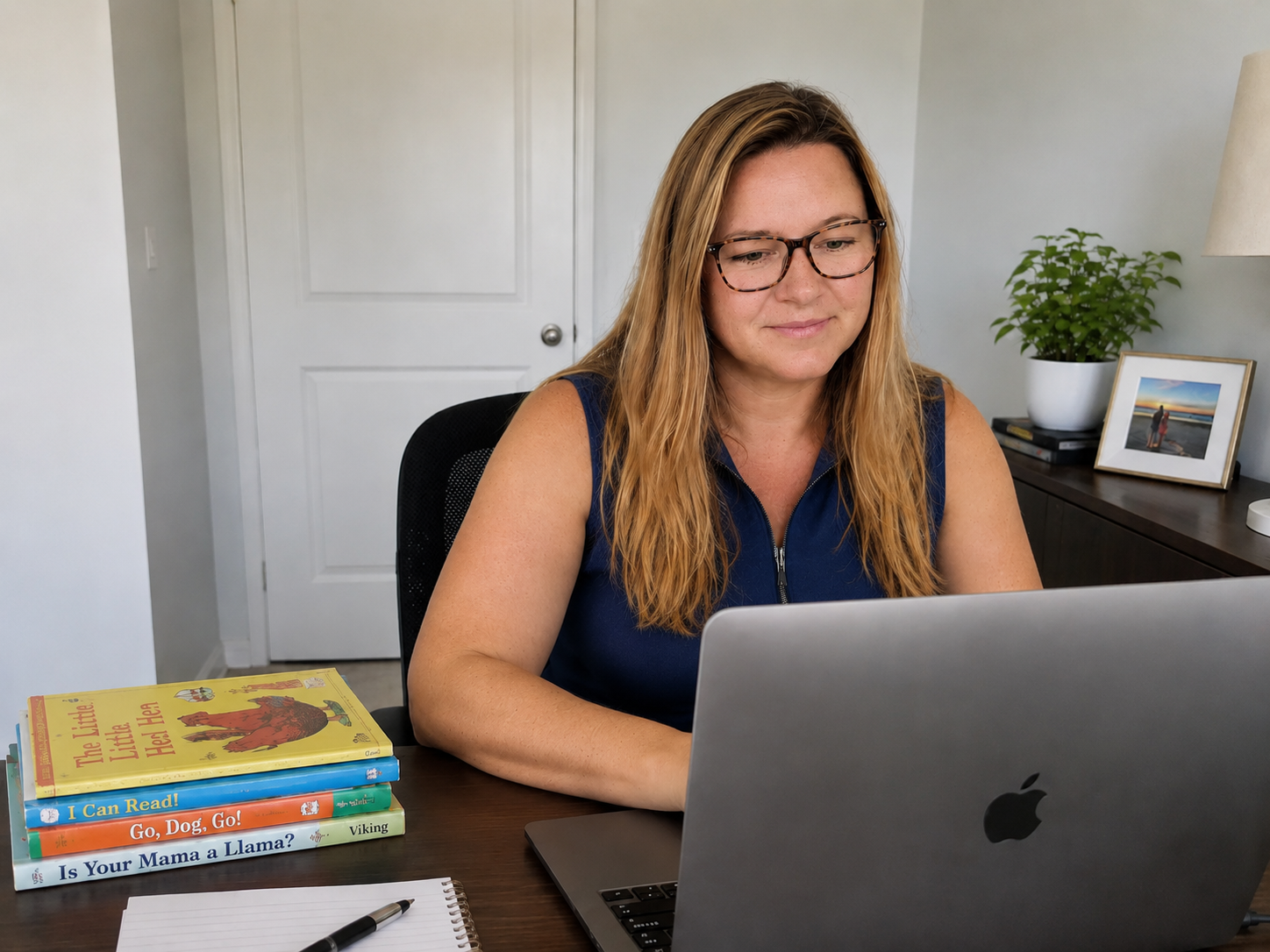
Florida families: dyslexia therapy may be more affordable than you think.
Through Step Up For Students, Florida's Family Empowerment Scholarship for Students with Unique Abilities (FES-UA) gives families of children with dyslexia and other specific learning disabilities an Education Savings Account they can use to pay for tutoring and therapy — including sessions with a Certified Academic Language Therapist.
The Family Empowerment Scholarship for Unique Abilities (FES-UA)
Formerly known as the Gardiner Scholarship, FES-UA is open to Florida students ages 3 through 12th grade with a documented specific learning disability, including dyslexia. Funds can go directly toward tutoring, therapy, and approved educational services — not just private school tuition.
Ask About Scholarship EligibilityEligibility and award amounts are set by Step Up For Students and the state of Florida, not by ClearPath Dyslexia. We're happy to help you understand how a scholarship could apply to therapy sessions — reach out and we'll walk you through it.
504 vs. IEP, Answered
Does dyslexia automatically qualify a child for an IEP in Florida?
Can my child have both a 504 Plan and outside dyslexia therapy?
How do I request an evaluation from my Florida school district?
Which plan is better for dyslexia, a 504 or an IEP?
Not sure which path is right for your child?
We can help you think through the school side and the therapy side together — book a free call with Kathleen.
Schedule a Free Consultation